
Funded by the Hong Kong Research Grants Council and received partial funding from the HKUST Institute of Emerging Studies with support from EY
PrincipaI investigator
Dr. Laurence L. DELINA
Co-Investigator
Assoc. Prof. Kevin Kim Pong TAM (HKUST)
Collaborators
Dr. Albert SALAMANCA (Stockholm Environment Institute Asia, Bangkok, Thailand)
Ms. Wiwik DHARMIASIH (Udayana University, Bali, Indonesia and University of Hawaii at Manoa, Hawaii, USA)
Assoc. Prof. Michelle Jaymalin DULAY (Ifugao State University, Ifugao, the Philippines)
Postdoctoral Fellows
Dr Nicolo Paolo LUDOVICE
Dr Lei SHI
Statistician
Mr Sanny AFABLE
Research postgraduate students
Ms. Ivee FUERZAS (Fall 2022-present)
Mr. Ginbert CUATON (Fall 2020-Spring 2022, transferred to another supervisor)
Student assistants
Ms. Dorothy CHIU (Summer 2022)
Mr. Martin HUNG (Fall 2022)
Mr. Zakk RATTANAMANEEJARAT (Fall 2022)
Ms. Rachel TSOI (Summer 2022)
Ms. Phoebe YEUNG (Fall 2022)
Mr. Marcus YU (Fall 2022)
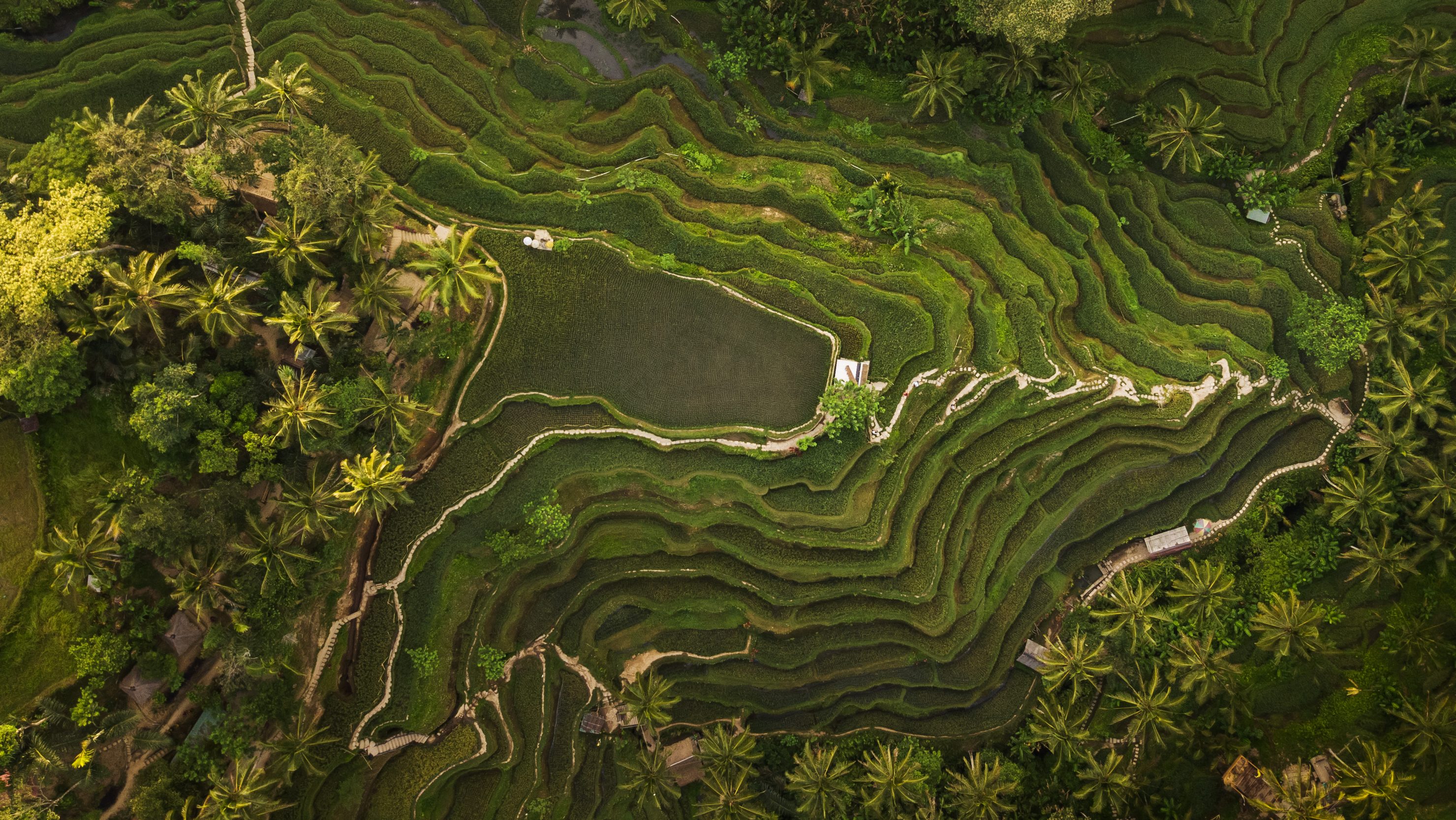
Resilient rice farming—the capacity to endure social, economic, and environmental shocks and stresses due to hazards and structural vulnerabilities—is imperative for food security, especially in cascading crises. In response to these stressors, contemporary sustainable development programs in rice-farming communities have focused on enhancing rice farmers’ material capital, such as farm inputs, crop seeds, and irrigation, and expanding farmers’ access to these assets. Although these interventions have increased the resilience of rice farmers, the contribution of non-material forms of capital, such as the farmers’ relationships with their fellow farmers, other actors in rice farming, and even with nonhuman entities such as the spirits and the Divine, are minimally considered and studied. Although these social capitals are not necessarily neglected, their contributions to resilience have not been properly unpacked. Therefore, the sociality of resilience has largely remained obscured. This project extends the literature on the non-material aspects that produce resilient livelihoods. It draws on in-depth, multi-method field research that includes surveys, interviews, and focus group discussions with indigenous rice farmers in vulnerable regions of the Philippines and Indonesia. The project will uncover, narrate, and analyze the lived experiences of Ifugao and Balinese rice farmers, focusing on the conditions that build their affective relationships with human and nonhuman entities and compare these narratives to reveal their similarities and variations in coping, survival, and resilience.
Outputs
Journal article: Delina, L., Ivee Fuerzas, Wiwik Dharmiasih, Michelle Jaymalin Dulay and Albert Salamanca. (2024). Are capital assets under pressure? The state of and challenges to indigenous rice farming in the cultural ricescapes of Indonesia and the Philippines. Journal of Rural Studies 106:103235 https://doi.org/10.1016/j.jrurstud.2024.103235
Journal article: Ginbert P. Cuaton, and Delina, L. (2022). Two decades of rice research in Indonesia and the Philippines: A systematic review and research agenda for the social sciences. Humanities and Social Sciences Communications 9:372 doi:10.1057/s41599-022-01394-z
Conference Presentation: Lei Shi and Delina, L.(2024). Balancing Heritage and Livelihoods: Contrasting Collective Governance and Resilience in Traditional Agricultural Communities of Bali and Ifugao. Ninth Asia Pacific Public Policy Network Conference. Guangzhou, China. 26 April.
Conference Presentation: Delina, L., Ivee Fuerzas, Wiwik Dharmiasih, Michelle Jaymalin Dulay and Albert Salamanca. (2024). Are capital assets under pressure? The state of and challenges to indigenous rice farming in the cultural ricescapes of Indonesia and the Philippines. Annual Meeting of the American Association of Geographers. Honolulu, Hawaii, USA. 17 April.
Opinion: Delina, L.L. (2023). Bali and Ifugao: Sustaining traditions in indigenous rice farming, Philippine Daily Inquirer, 10 October. Read here.
Working Paper: Rice, resilience, and relationships: Unpacking the intangible sources of resilience in Southeast Asian heritage ricescapes
Working Paper: Affective relationships as nonmaterial capital assets in resilience-building in the rice-terraced cultural landscapes of the Philippine Cordillera.
Working Paper: The overlooked intermediary roles of indigenous village leaders: Comparing heritage governance effectiveness in the ricescapes of Bali and Ifugao.
Working Paper: Affective relationships in social resilience-building: Latent social networks and lifeworlds for risk adaptation in Indigenous Indonesian and Philippine ricescapes
 The Delina Research Group